
Self help is the most crowded non-fiction shelf in publishing — and the most rewarding when marketing actually lands. Roughly 1 in 7 print books sold in the US falls under personal development, mindset, productivity, or relationships. The category sells in volume; it also drowns 90% of new entrants in week-one obscurity because the supply of "five steps to a better life" titles is effectively infinite.
This guide is the marketing playbook a self help author actually needs in 2026. Not vague "build your platform" advice — specific channels, realistic budgets, the mistakes that kill launches, and where the leverage hides for authors who don't already have a 100K-follower Instagram.
Why Self Help Is Different From Other Non-Fiction
Memoir sells on voice. Business books sell on credentials. Academic non-fiction sells on syllabus adoption. Self help sells on trust + transformation promise. A reader buys a self help book because they believe the author has a) lived the problem, b) found a real solution, and c) can teach it in a way they can apply by Tuesday.
That trust is built before the book ever appears on a shelf. The launch isn't a launch — it's the visible peak of an iceberg of credibility-building that started 12–18 months earlier. Self help authors who try to compress this into a six-week pre-order push almost always underperform.
The good news: trust compounds. A self help author with a five-year backlist and a slow-grown email list usually outsells a debut author with the same writing quality and a $50K launch budget. Marketing isn't a one-time sprint here — it's a system you build and keep running.
The Three Audiences You Actually Sell To

Most self help authors think they have one audience: "people who want to improve their life." That framing is too broad to market to. The book actually sells to three distinct audiences, and each needs a different message.
- The acute searcher — someone Googling the exact problem your book solves at 11 PM tonight. They're high-intent; they buy fast; they don't care who you are. Reach them through Amazon SEO, Google search, Pinterest pins, and YouTube long-tail keywords.
- The credibility-led reader — someone who finds you through a trusted source (a magazine feature, a podcast, a recommendation from a creator they follow). They buy slower but buy more, and they tell other people. Reach them through editorial press, podcast tours, and influencer seeding.
- The audience member — your existing email list, social followers, course alumni. The smallest group at debut, but with the highest conversion rate (often 5–15% of an engaged email list buys on launch week).
A balanced campaign pulls on all three. Authors who only push to their audience hit a ceiling around their list size. Authors who only chase searchers never build the brand that turns one book into a five-book career.
What Actually Works in 2026 (Channel by Channel)
Below is the realistic ROI of each major self help marketing channel, based on patterns we see in our own author roster and across the indie publishing data Reedsy, Kindlepreneur, and Written Word Media publish each year.
Editorial press features
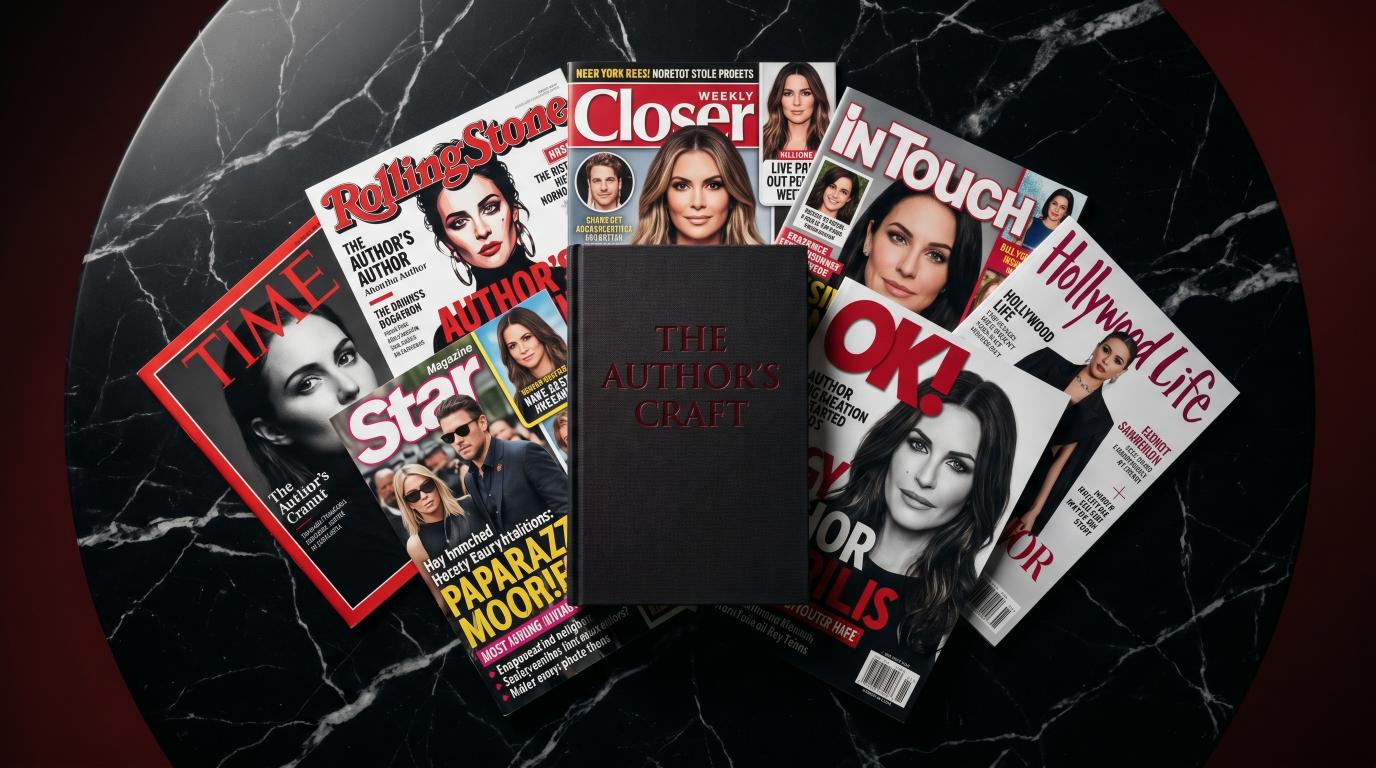
The single highest-leverage channel for self help authors with mid-size budgets. A full feature article in a national outlet like TIME or Miami Herald — not a press release, an actual editorial piece — does three things at once: it drives Amazon sales for 2–4 weeks, it fills the "as featured in" badge bar on your website forever, and it raises podcast booking rates by 30–50%. Pricing on guaranteed editorial campaigns ranges from a few hundred dollars (single-outlet trial) to $20K (multi-outlet with TIME or Rolling Stone tier). See book PR cost for the full breakdown.
Podcast tour
Self help is podcast-native. A 12-podcast tour over 90 days, targeting shows in the 5K–50K download range, will reliably move 200–800 books and add 1,000–3,000 emails to your list if you have a strong opt-in. The catch: bookers ignore authors with no press credibility, so a podcast tour works much better when you've already landed at least one editorial feature.
Email list
The single most underrated asset in self help. A list of 5,000 engaged readers will outsell most paid ad campaigns at launch. Build it through a high-value lead magnet (workbook, audio meditation, 7-day challenge) tied directly to your book's promise — not a generic "newsletter signup."
YouTube
Patience-required, compounds for years. Self help YouTube favors longer videos (15–25 minutes), specific search-friendly titles, and consistency over polish. Authors who post one video per week for 18 months typically reach 5K–25K subscribers and a steady 50–200 book sales per month. Not viable as a launch channel; powerful as a sustained engine.
Paid Amazon ads
Solid but unspectacular for self help. Expect 0.3–0.6 ROAS in the first 60 days while you find keywords; can break even or modestly profit with iteration. Strong category ranking on Amazon matters more than the ads' direct revenue — a book that sticks in a top-20 sub-category sells from organic browse for years.
Facebook and Instagram ads
Lower ROI than paid Amazon for most self help titles unless you have a strong creator presence already. Better used for list-building campaigns (driving cold traffic to a lead magnet) than direct book sales.
TikTok and BookTok
BookTok is fiction-dominated; self help has a smaller dedicated corner. Authors who lean visual (e.g., infographic-style breakdowns of book ideas) can break through. Most self help authors get more leverage from creator partnerships than organic posting.
The Launch Calendar That Sells Books
A 90-day self help launch window is realistic. Below is the calendar that works for a debut or second-book author with a $5K–$15K marketing budget.
Day -90 to Day -60 (foundation):
- Lock in cover, title, subtitle, back-cover copy
- Build or refresh author website with launch landing page
- Produce 2–3 short videos that demonstrate the book's central idea
- Open pre-orders on Amazon, Barnes & Noble, Apple Books
Day -60 to Day -30 (credibility):
- Lock 1–3 editorial press features (TIME, Miami Herald tier — see VUGA's editorial network)
- Begin pitching podcasts; book a target of 12 over the next 90 days
- Run a free-chapter download campaign to build email list to 1K–5K
- Send ARCs to 20–40 reviewers in your specific niche
Day -30 to launch:
- Stagger podcast appearances across launch week and the four weeks after
- Run a one-week pre-order incentive (bonus chapter, workbook PDF) to compress sales into a single window
- Publish 2–3 pieces of guest content on outlets that link to the book page
- Email list gets 4–6 launch emails over the final 14 days
Launch week + four weeks after:
- Editorial features go live
- Daily email or social activity — short videos, quote graphics, podcast clips
- Begin Amazon ads (don't start before launch — you'll have no algorithmic data)
This calendar assumes one author working part-time on marketing, plus a publisher or contractor handling press. It will not produce a #1 NYT bestseller. It will produce a launch that sells 2,000–8,000 copies in the first 90 days — which is enough to keep most self help books printing for years.
Mistakes That Kill Self Help Launches
After watching hundreds of self help launches, the same mistakes repeat.
Compressing the timeline. A 30-day launch sprint is too short to build the press and podcast layer that drives durable sales. Authors who give themselves 90 days outsell authors who give themselves 30 by 3–5x on average.
Treating one channel as the whole strategy. "I'll just go viral on TikTok." "I'll just do podcasts." "I'll just run ads." Single-channel launches almost always disappoint because each channel only reaches one of the three audiences described above.
Chasing famous endorsements over real readers. A blurb from a celebrity author looks great on the back cover and rarely moves units. Energy spent landing one celebrity blurb is usually better spent landing five real podcast appearances.
Skipping the email list because "nobody reads email." Engaged email lists outconvert every other channel for self help. Always.
Confusing thought leadership with marketing. Posting daily insights on LinkedIn feels like marketing. It is brand-building. It rarely sells books on its own. Pair it with a hard, time-bound conversion mechanism (free chapter download, launch-week pre-order bonus) or it just produces engagement without revenue.
Backlist Marketing — Where the Money Actually Is
Most self help authors discover after their first book that 70–80% of their lifetime royalties come not from launch month but from steady backlist sales in years 2–5. That's why marketing systems matter more than launch fireworks.
A self help backlist sells through:
- A constantly maintained Amazon ad portfolio (small budget, always running)
- Search-driven content — blog posts, YouTube videos, podcast appearances tied to evergreen keywords from the book
- "As featured in" credibility kept current with at least one new press feature per year
- A live email list with regular sends (not necessarily weekly — monthly is fine if the content is strong)
- Continued podcast appearances at a slower cadence (1–2 per quarter)
A book that sold 4,000 copies in launch month and then sells 200/month for the next four years finishes its life at 13,600 copies. A book that sold 10,000 copies at launch but goes silent immediately after often ends at 12,000 lifetime. The slower book wins.
What VUGA Does for Self Help Authors
VUGA Publishing is a marketing-first independent publisher built specifically for the credibility layer that self help launches need. By contract, we place authors in full editorial features — not press releases, not wire blasts — across outlets including TIME, Rolling Stone UK, Miami Herald, Hollywood Life, plus our 140-outlet owned network and a syndication footprint of 1,400 newspapers.
For self help authors specifically, that translates to:
- Full feature articles that frame the author as a credible voice on their topic — the kind of press that actually moves a podcast booker
- "As featured in" badges that compound conversion across every channel
- Packages from a $300 network article single-feature pickup through the $14,997 Celebrity Bundle and $19,997 TIME + Rolling Stone tiers — sized to where you are in your career
If you want to talk through which package fits your book and launch plan, contact us. For a deeper look at the credibility ladder self help authors climb from indie debut toward larger publishing deals, see self pub to Big Five and the for authors overview.
A 12-Month Self Help Author Roadmap
If you want one structure to follow, here it is.
Months 1–3: Build the platform. Website, email list opt-in, 12 long-form blog posts on book-adjacent keywords, 3 short videos demonstrating the book's central idea. Record the audiobook.
Months 4–6: Lock the launch press. Book 1–3 editorial features. Open pre-orders. Start pitching podcasts.
Months 7–9 (launch + 90 days post): Execute the launch calendar above. Press goes live, podcast tour runs, email sequence drips, Amazon ads turn on.
Months 10–12: Maintenance mode. Continue Amazon ads, post 2 blogs/month, do 1–2 podcasts/quarter, send monthly emails. Begin planning book #2.
This is unglamorous, deliberate, and effective. Self help marketing in 2026 rewards authors who treat it as a multi-year practice — not a six-week panic attack.
Sources for this article:
- Written Word Media, "Author Earnings Report"
- Reedsy, "How to Market a Self-Help Book"
- Kindlepreneur, "Self-Help Book Marketing"
- BookBub Partners Blog, "Marketing Non-Fiction"
- Jane Friedman, "Author Platform"