Every indie author has heard the dream version: Hugh Howey self-published Wool on Kindle, sold 100,000+ copies, Simon & Schuster came calling, eight-figure deal. Andy Weir put The Martian on his blog for free, then on Amazon for $0.99, Random House bought him for six figures, then Hollywood paid for the movie. Colleen Hoover spent a decade self-publishing before traditional publishers started fighting over her.
It's not luck. There's a pattern — and it's reproducible. This article is the honest map: how indie authors actually get discovered by major publishers in 2026, the three signals agents and editors track, the role press authority plays in the discovery, and the 18-month plan that maximizes your chances of a Big Five offer for book #2.
By the end you'll know whether the path is realistic for your specific situation, and what to invest in this year vs save for later.
The Big Five Are Watching — Yes, Really
It's tempting to assume major publishers ignore indie books. They don't. Every major publisher (Penguin Random House, HarperCollins, Simon & Schuster, Macmillan, Hachette) has scouts — junior editors and acquisition assistants whose job is monitoring breakout indie books for acquisition opportunities.
The scouts watch:
- Amazon bestseller charts — especially the daily moves (a book that jumps from rank 5,000 to rank 200 overnight catches eyes)
- TikTok / BookTok — the fastest-growing discovery channel; books that go viral on BookTok often get acquisition calls within weeks
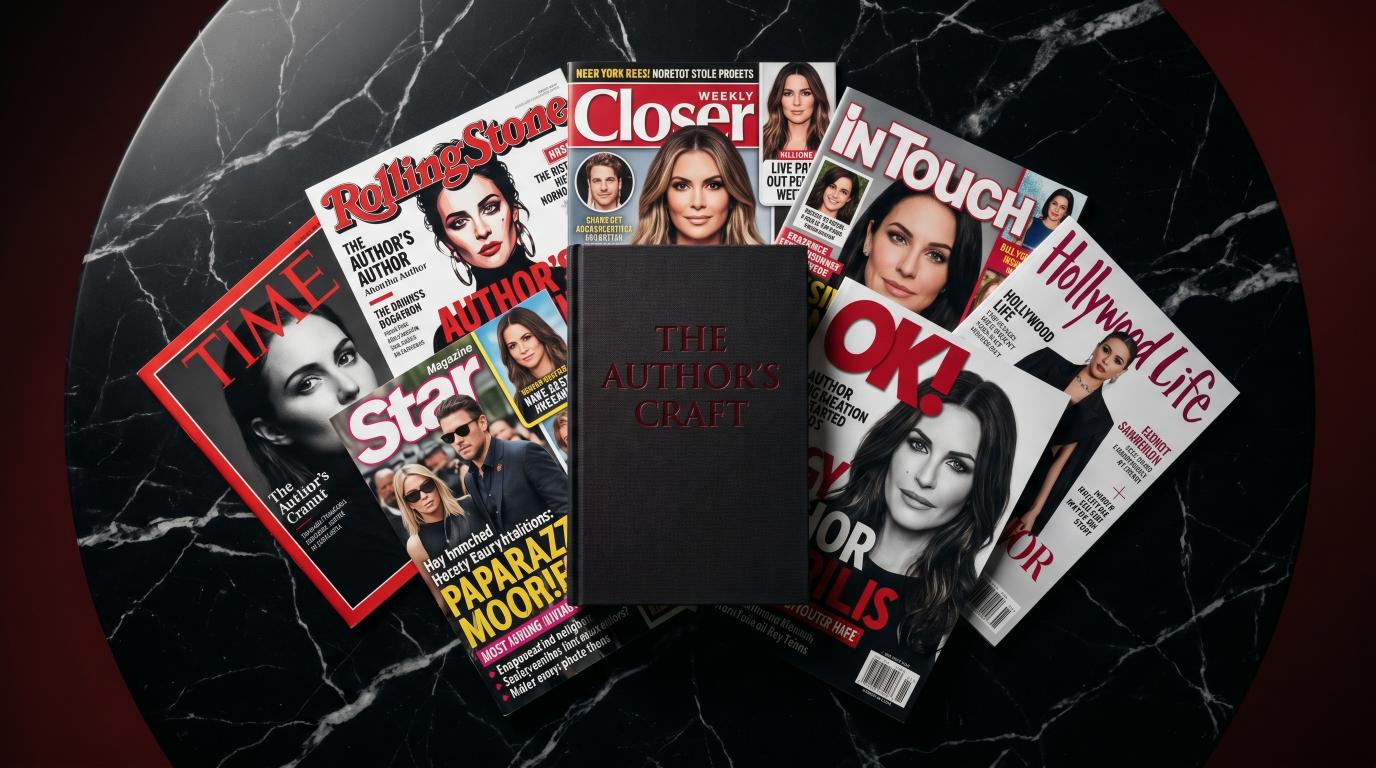
- Press features — when an indie author appears in major media (Miami Herald, OK!, TIME, Rolling Stone, the New York Times Book Review), agents and editors take note
- Goodreads activity — books with rapid "want to read" growth rates
- Author social platforms — sudden growth on author IG/Threads/Substack signals breakout
- Direct submissions through agents who pre-vet indie successes
The pattern of indie-to-traditional discovery isn't "publishers find you randomly." It's "publishers find authors who've already proven there's an audience and built credibility signals." Press is one of the strongest credibility signals — it's the one most indie authors don't have, and the one that most clearly distinguishes a "self-published novel" from a "discovered debut."
The Three Signals That Trigger Acquisition
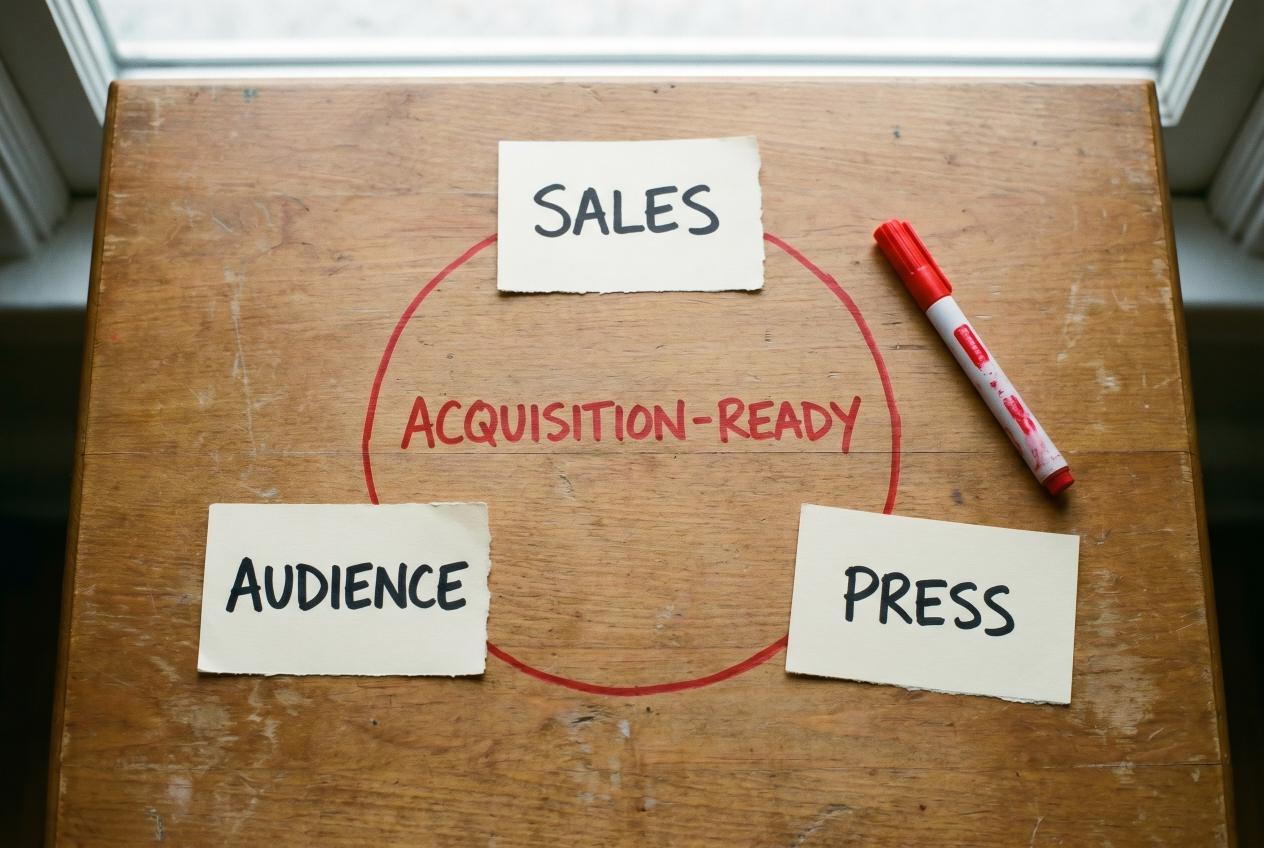
Looking at the indie authors who've actually gotten major deals over the last 5 years, the pattern is clear. At least two of the following three have to be true before a major publisher comes calling:
Signal 1: Sales Velocity
Sales numbers that show the book has organic legs. Specifically:
- 50,000+ copies sold (across all formats) in 12-18 months — for fiction
- 10,000+ copies sold for non-fiction (lower threshold because non-fiction has higher per-unit value)
- Or rapid acceleration — even smaller absolute numbers if the trajectory is steep
Hugh Howey's Wool hit 50,000+ copies before Simon & Schuster moved. Andy Weir's The Martian sold 35,000 copies on Kindle in three months. Colleen Hoover's books crossed six-figure indie sales before her major deals.
These numbers can be hit by indie authors. They're hard, but they're not impossible — especially with a series or a high-conversion sub-genre.
Signal 2: Audience / Platform
A real audience that follows you, not just buyers. The platform metric scouts actually track:
- Engaged email list of 5,000+ subscribers (not just signups — open rates above 25%)
- Social following with high engagement (NOT raw follower count — engagement matters more)
- Recurring press / podcast appearances
- Speaking invitations or paid panels
- Newsletter / Substack with paid subscribers (a strong signal that readers will pay for your voice)
Most indie authors who got deals had niche but loyal audiences before the deal. Brandon Sanderson built his platform through Sanderson 101 lectures and his blog before bigger deals. Mark Manson grew a blog audience before his self-published Subtle Art of Not Giving a F*ck exploded and HarperOne acquired the trade rights.
Signal 3: Press Authority
This is the signal most indie authors miss — and the one that often tips a publisher decision when sales and audience are borderline.
Press authority means appearing as a credible source in real magazines, newspapers, and outlets that publishers' acquisition teams already read. The signal isn't just "your book got covered." It's "you appear as a person whose voice matters" — quoted in articles, profiled in features, listed in roundups, interviewed on podcasts that the publishing industry pays attention to.
When an acquisition editor opens your query letter and your bio reads:
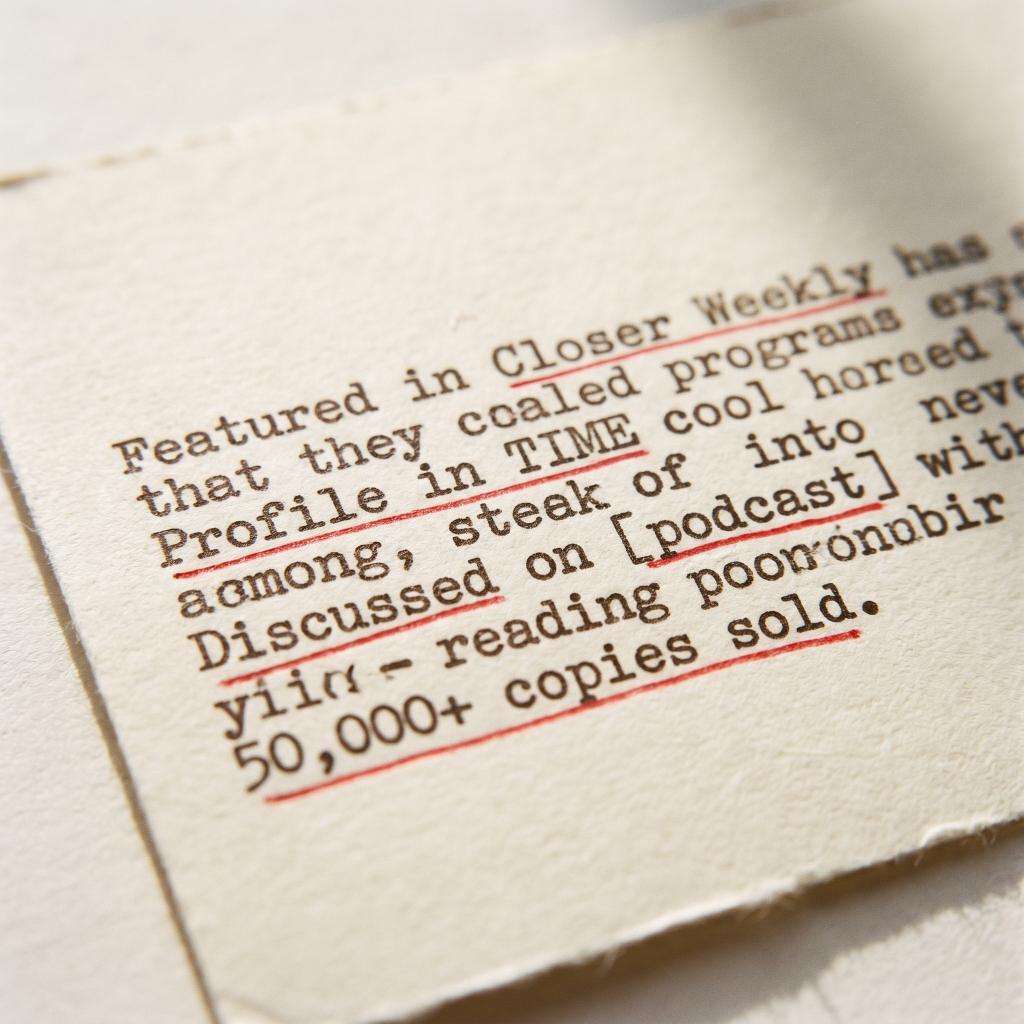
"Author of [book name]. Featured in Miami Herald, OK! Magazine, and Hollywood Life. Profile in TIME (digital edition). Discussed on [podcast names]. 50,000+ copies sold across all formats."
— that's a fundamentally different read than:
"Self-published author of [book name]. 50,000+ copies sold."
Same sales. Different probability of acquisition. Press authority is what makes you read like a "discovered author" rather than a "lucky self-pub." Editors back authors who can be sold to media post-acquisition; press features prove you're already that person.
How Press Builds Author Authority Specifically
There's a measurable mechanism by which press features accumulate into "author authority." It's not magic — it's a stack of effects that compound:
1. Permanent indexable URLs on tier-1 domains
Every editorial feature on a real magazine creates a URL on that magazine's actual domain. Miami Herald, OK! Magazine, Hollywood Life, TIME, Rolling Stone — these are DA 80+ domains that Google considers authoritative. When someone Googles your name, those articles surface. Forever.
A debut author whose Google search results show 5 magazine features alongside their Amazon page reads as established. Same author with no press features reads as "self-published, possibly unproven."
2. Quotable copy you can re-use everywhere
A magazine feature gives you copy you can re-use: in your Amazon A+ Content, on your author website's "as featured in" strip, in pitches to other outlets, in your media kit, on book back covers, in newsletter signature lines, in agent query letters. Each placement compounds the authority signal.
3. Stronger pitches to OTHER outlets
The journalism world is a recommendation network. Editors at podcast networks, newspapers, and other magazines see what's been covered before. A pitch that opens "Sarah Author was recently featured in Miami Herald and OK! Magazine — here's a fresh angle for your readership" gets a fundamentally different response than a cold pitch from an unknown.
This is why authors who land their first major-magazine feature often see subsequent coverage roll in within 3-6 months — the first feature unlocks the second; the second unlocks the third.
4. Acquisition-team awareness
Big-publisher scouts and acquisition editors actually read these magazines (or have systems that flag mentions). When a self-published author appears in three major celebrity weeklies + a TIME piece + a Rolling Stone interview, the scouts notice. They put together your profile. They start tracking your sales. When sales and audience cross their thresholds, they reach out — and the press features make the outreach more confident, not speculative.
The 18-Month Authority-Building Plan
If your goal is "indie sales for book #1, traditional deal for book #2," here's the realistic timeline:
Months 1-3: Launch with conversion stack + initial press
- Launch book #1 with great cover, hook blurb, niche categories, ARC reviews
- Get first press placement (even small — VUGA Network Article $300 to test the format, or 10 Network Articles $3,000 for 10 placements in the digital network)
- Build email list to 1,000+ subscribers via lead magnet
- Open Reedsy Marketplace profile if you also offer services
Months 4-6: First major editorial features
- VUGA 10 + Miami Herald package ($7,997) — three guaranteed celebrity-magazine features (Miami Herald)
- The "as featured in" strip on your author website starts becoming real
- Continue building email list (target: 3,000+)
- Begin publishing on niche author platforms (Medium, Substack, niche genre-specific blogs)
- Drive sales through Amazon Ads + organic discovery
- Goal: 5,000-15,000 copies sold by month 6
Months 7-12: 10 + Celebrity Bundle tier press
- VUGA 10 + Celebrity Bundle package ($14,997) — adds OK! Magazine and Hollywood Life
- Now you have 5 major celebrity-magazine features. Acquisition scouts track this profile.
- Premium add-ons: TIME ($14,997) and/or Rolling Stone UK ($8,997) — these are the acquisition-tier signals. An author who's been in TIME has a fundamentally different agent/editor reception than one who hasn't.
- Speaking: apply to author panels at industry events (Writer's Digest Conference, RWA, ITW, etc.)
- Podcast tour: pitch yourself to indie-publishing podcasts. Press features make pitching easier.
- Goal: 30,000+ copies, email list 5,000+, 7+ major press placements, 5+ podcast appearances
Months 13-18: Approach agents from a position of strength
- By now: 50,000+ copies sold (or trajectory pointing at it), 7+ major press features, 5,000+ email list
- Query letters now lead with press authority + sales data + audience metrics, not "I'm a debut author"
- Agents respond at significantly higher rates. Some reach out to you first based on press tracking.
- Manuscripts for book #2 (or expanded book #1 territory) get serious consideration from Big Five
- Realistic outcome: 25-40% of authors who hit this profile get at least one major-publisher offer; 5-15% get bidding wars
This is not a guaranteed path. Plenty of authors who follow it don't get traditional deals. But the probability is dramatically higher than authors who skip the press authority layer and try to query agents based on sales alone.
Real Indie-to-Traditional Cases (Patterns)
The actual stories show the pattern in action:
- Hugh Howey — Wool sold 100,000+ on Kindle. Got press in The Atlantic and other outlets. Simon & Schuster offered seven figures.
- Andy Weir — The Martian on his blog → Amazon → Crown Publishing acquired after the book got media buzz from technical-reader communities and gradually mainstream press.
- Colleen Hoover — Self-published most of her career. As her sales grew, she got press in everything from Cosmopolitan to The New York Times. Atria Books picked up trade rights. Her later books are bidding wars.
- E.L. James — Fifty Shades started as Twilight fan-fic on a small platform. Once mainstream press picked up the "mommy porn" cultural moment, Vintage acquired the print rights for serious money.
- Mark Manson — Built blog audience first. Self-published Subtle Art of Not Giving a F*ck. As it climbed Amazon and got press, HarperOne offered the trade deal.
Every one of these had press authority + sales + audience before the deal. The press wasn't optional — it was the credibility layer that made the deal feel safe to publishers.
What This Doesn't Promise
Honest disclaimer: getting a major-publisher deal for book #2 is not guaranteed by any plan, including this one. The publishing industry is unpredictable. Some great books with great press never get major deals. Some books with weak press get deals because the editor liked them.
What the press authority layer does is dramatically improve the odds — it turns a "lottery ticket" into a "calculated long-shot." For ambitious indie authors, that shift is the difference between "hoping to get noticed" and "building toward being noticed."
The investment ($14K-$40K total over 12-18 months for full authority stack — 10 + Miami Herald + Celebrity Bundle + premium add-ons) is real money. It only makes sense if you're committed to the long-term path. For an author whose first book is a one-off hobby project, this is overkill. For an author who wants book #2 to be the breakthrough, it's the structural investment that gets you in front of acquisition teams.
Bottom Line
Indie-to-traditional discovery is a real path with a measurable pattern: sales, audience, and press authority. The press authority layer is the one most indie authors skip — and the one that most clearly distinguishes "self-published novelist" from "discovered debut" in the eyes of agents and acquisition editors.
Press doesn't replace sales or audience. It compounds with them. A 50,000-copy seller without press features looks like a lucky self-pub. A 50,000-copy seller with TIME, Miami Herald, and OK! Magazine features looks like an established author who happens to be self-published. The second one gets the call.
If your goal is book #1 indie + book #2 with a major publisher, the 18-month authority plan is the realistic path. VUGA author packages are the fastest way to build the press layer at fixed prices with money-back guarantees:
- Network Article $300 — see the format
- 10 Network Articles $3,000 — 10 network placements (foundation)
- 10 + Miami Herald $7,500 — adds Miami Herald (major feature)
- 10 + Celebrity Bundle $14,997 — adds OK! Magazine + Hollywood Life (4 major titles total)
- TIME ($14,997) + Rolling Stone UK ($8,997) premium add-ons — the acquisition-tier signals
Stack the right tier for your ambition. Press first; sales follow; agents notice.
Sources for this article:
- Publishers Weekly, "Self-Published to Traditional: The Acquisition Path"
- Jane Friedman, "From Self-Pub to Trad: What Editors Look For"
- Joanna Penn, "Hybrid Author: Self-Published and Traditional"
- David Gaughran, "The Indie-to-Trad Pipeline"
- Reedsy, "How to Get a Traditional Book Deal as a Self-Published Author"
- The Authors Guild, "Industry Reports on Indie Author Acquisitions"