
A children's picture book is a strange product. It is bought by adults, read aloud to non-buyers, judged in 30-second flips at the bookstore, and gatekept by a small army of librarians, teachers, and parenting reviewers most authors don't even know exist. The marketing for it looks almost nothing like the marketing for a thriller, a memoir, or a self help book.
This guide is the realistic 2026 launch playbook for indie picture book authors. Not "post on Instagram and hope" — specific channels, real timelines, the people who decide whether your book gets seen, and where the leverage is for an author without a HarperCollins logo on the spine.
What Makes Children's Books a Different Marketing Animal
Three structural facts about the children's picture book market shape every marketing decision:
1. The buyer is not the reader. Adults buy. Children read or are read to. So your marketing has to speak to two audiences at once: the parent or grandparent or teacher who decides what to buy, and the kid who decides whether they ever want to hear it again. Books that read aloud well sell more — librarians, teachers, and parents recommend them to peers.
2. Gatekeepers are real and powerful. Librarians, school media specialists, indie bookstore children's buyers, and a small set of professional reviewers shape which books get visibility. A single starred review in Kirkus, School Library Journal, Publishers Weekly, Booklist, or Horn Book can move a picture book into 200+ library systems.
3. Sell-through happens slowly, then for years. Most picture books peak in months 2–6, not week 1. A successful indie picture book typically sells 1,500–5,000 copies in year one and another 500–1,500 per year for the next several years through library reorders, word-of-mouth, and seasonal teacher purchases.
If you launch a picture book like a self help book — front-loaded blitz, ad spend at peak in week one, social media push — you will mis-time it badly.
The Audiences You Actually Need to Reach
Forget "parents." That is too broad to plan around. Picture book marketing actually targets six specific groups, in order of leverage:
- Children's librarians — public and school. They buy in volume, recommend to colleagues, and influence library system purchasing for years.
- Indie bookstore children's buyers — the buyer at Powell's, BookPeople, Books of Wonder, or your strong regional indie. Their endorsement gets your book on a face-out shelf.
- Teachers, especially K–3 classroom teachers — they buy multiples, build read-aloud lists, and post on Instagram with millions of fellow-teacher followers (#teachersofinstagram is a real and active community).
- Parenting bloggers and reviewers — the long tail of mom-blog and parenting-podcast reviewers who still drive Amazon sales for picture books.
- Grandparents — overlooked but huge. Grandparents are 30–40% of children's book purchases according to ABA data. They buy hardcovers as gifts, often based on magazine features and recommendations.
- Direct social audience — Instagram, TikTok #booktok-for-kids, parenting YouTube. Lower per-impression value than the gatekeepers above, but builds momentum.
Most indie picture book authors waste their first year focusing only on group 6. The first five matter much more for sustainable sales.
Pre-Launch — What Has to Happen Before Pub Date
Picture books require longer pre-launch runways than almost any other category. Six months minimum; nine is better.
Six to nine months out:
- Book finalized: cover, interior illustrations, ISBN, dedication, copyright page complete
- Print proofs ordered and inspected — picture book print quality matters more than any other category, so don't shortcut this
- ARCs (advance reading copies) printed in real hardcover format. Not PDFs. Picture book reviewers explicitly will not review from PDF.
- Trade review submissions sent. Kirkus (paid, $425 standard / $575 expedited), Publishers Weekly BookLife (paid for indie), School Library Journal (free for traditional, paid review service for indie). Submission windows are 4–6 months pre-pub.
- NetGalley listing live for librarian and educator access (most indies access via co-op programs like the BookSparks NetGalley access)
Three to six months out:
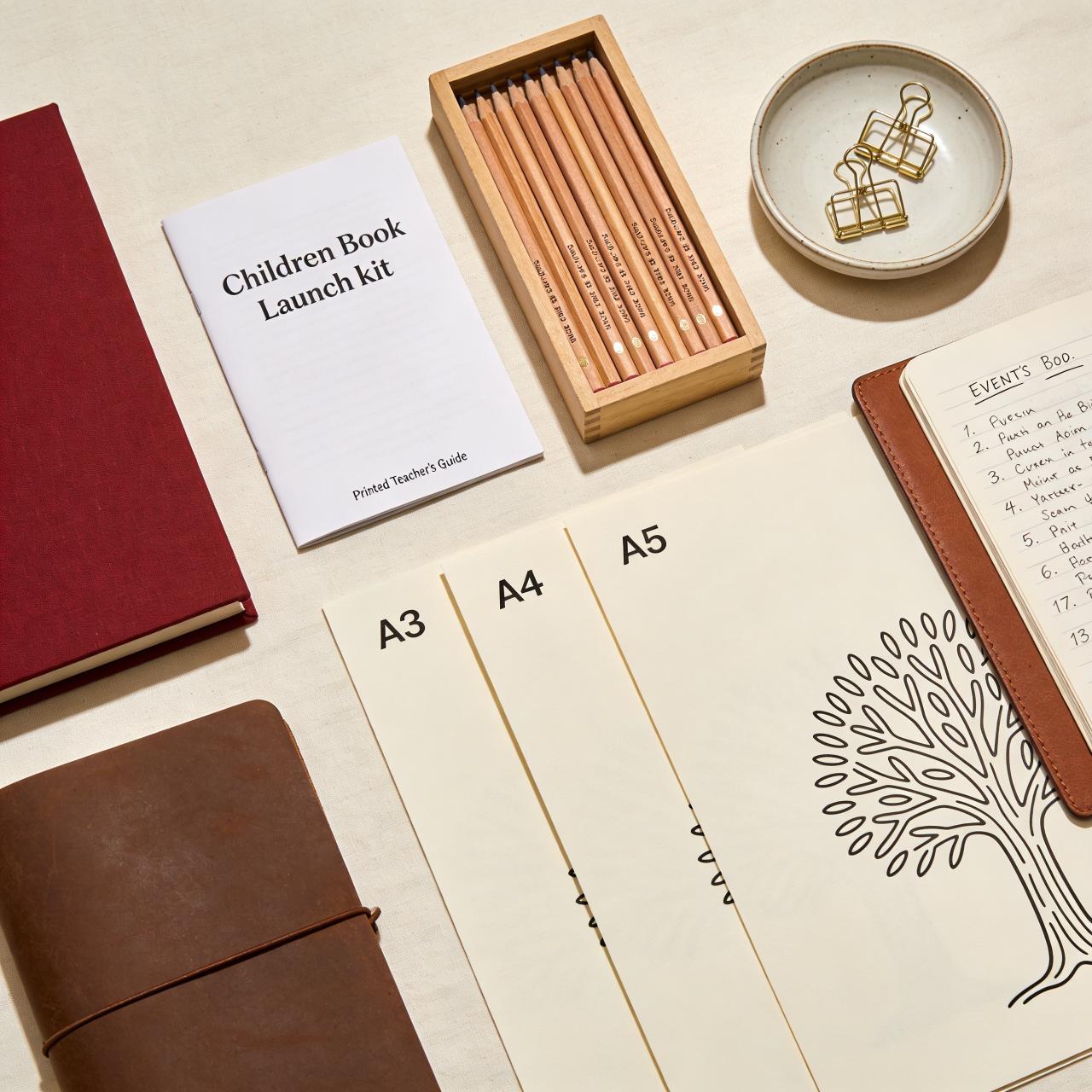
- Build the author website with a teacher's guide PDF download, lesson plan ideas, and a "for educators" page
- Begin pitching for school visit calendars (book one season in advance — schools plan early)
- Reach out to indie children's bookstores in your region offering signed-copy launch events
- Produce a one-minute book trailer — animated, simple, focused on a single scene
- Begin building an educator email list through free coloring page or activity sheet downloads
Two months out through launch:
- Stagger media outreach to parenting podcasts, mom blogs, grandparent-focused magazines
- Lock 1–2 editorial press features in lifestyle or parenting outlets — see VUGA's editorial network for the kind of magazine feature placements that move children's books
- Offer pre-order incentives: signed bookplate, downloadable activity pack, video reading from the author
Trade Reviews — The Single Highest-Leverage Move
If you only do one thing for your picture book launch, do this: get reviewed by a trade publication that librarians and bookstore buyers actually read.
The five trade reviews that matter for children's picture books, ranked by influence:
- Kirkus Reviews — paid for indie ($425/$575). A starred Kirkus review is enormously valuable. Even a non-starred positive review opens doors.
- Publishers Weekly BookLife — paid for indie. PW reach is broader than Kirkus; the indie-specific BookLife stream is taken seriously by libraries.
- School Library Journal — primarily reviews traditionally published, but accessible to indies through paid submission services and co-op review programs.
- Booklist — ALA publication, librarian-focused. Hard to access for indies but possible.
- Horn Book — the gold standard for prestige. Very hard for indies to access; not impossible.
A picture book with 2–3 trade reviews enters library acquisition systems automatically through ingestion services like Baker & Taylor and Ingram. A picture book with zero trade reviews has to be hand-pitched to every single library, which most authors cannot scale.
If you can only afford one paid trade review, pay for Kirkus. The ROI for picture books is real.
School Visits — The Hidden Revenue Engine
For picture book authors willing to travel, school visits are often the single largest revenue line in years 2–5 of the book's life. Going rates in 2026:
- Local one-day visit: $500–$1,500 plus expenses
- Full-day visit with multiple sessions: $1,500–$3,000
- Author-celebrity visits (often through Penguin Random House Speakers Bureau or similar): $3,000–$10,000
- Virtual visits (post-2020 norm): $250–$750 per session
A picture book author doing 20 school visits in a year at an average of $1,200 grosses $24,000 directly — plus the book sales each visit triggers (typically 50–200 books per visit through pre-order forms).
The catch: schools book 6–9 months in advance and want polished presenters. Practice your visit. Have a 30-minute, 45-minute, and 60-minute version. Bring a slideshow. Have a craft or activity. The authors who treat school visits seriously turn one book into a sustainable income for years.
Bookstore Strategy — Indies Over Chains
Children's picture books punch above their weight at indie bookstores. The chains (Barnes & Noble, Books-A-Million) are harder for indies to crack and lower-leverage when you do — children's section endcaps are dominated by Big Five titles with co-op marketing budgets.
Indie children's bookstores, by contrast:
- Hand-sell every book they stock, often through staff picks
- Host story-time events and signed-copy launches
- Connect to local schools and libraries
- Drive regional momentum that nationally-distributed authors can't match
For an indie launch, the play is: pick 8–15 indie children's bookstores within driving distance, send each a signed ARC with a personalized letter from the author offering a story-time event, and follow up by phone. Conversion rate is typically 30–50% — meaning 4–8 confirmed events from a 15-store outreach.
What Realistic Sales Look Like
Honesty matters here. Most "5-figure indie author" claims you see online are not picture book authors — picture books at indie scale rarely produce that immediately because the price point ($14.99–$19.99 hardcover) and royalty share work against high-volume revenue.
Realistic year-one outcomes for an indie picture book with a $5K–$15K launch budget and disciplined execution:
| Metric | Realistic Year One |
|---|---|
| Print copies sold | 1,500–5,000 |
| Library system pickups | 30–200 |
| School visits booked | 4–20 |
| Editorial press features | 1–4 |
| Trade reviews | 1–3 |
| Net revenue (book + visits) | $8,000–$45,000 |
A picture book that hits the upper end of this range and stays in print for 5+ years often clears $80K–$200K in lifetime gross to the author. That's a strong indie outcome — and it's why the slow, patient marketing approach matters.
What VUGA Does for Children's Picture Book Authors
VUGA Publishing is a marketing-first independent publisher, and the lift we provide for picture book authors specifically sits at the credibility-and-feature layer. By contract, we place authors in full editorial articles in outlets like Miami Herald, Hollywood Life, OK!, and our 140-outlet owned network — magazine features that resonate with the parent and grandparent buying audience that drives picture book sales.
For children's authors specifically, this creates:
- "As featured in" badges parents and grandparents recognize, increasing Amazon and bookstore conversion
- Magazine features with photography that work as gift-buying recommendations during holiday seasons
- Press credibility that helps indie bookstore buyers and school librarians take an unknown author seriously
Our packages range from a $300 network article single-feature pickup to fuller campaigns at the $14,997–$19,997 tier. For more on the credibility and press layer of a children's launch, see book PR cost, the for authors page, or contact us to talk through your specific book.
A Realistic 9-Month Picture Book Launch Calendar
Months -9 to -6: Finalize book. Order ARCs. Submit to trade reviews (Kirkus, PW BookLife). Build website. Begin school visit outreach.
Months -6 to -3: Indie bookstore outreach. Educator email list build. Editorial press pitching begins. NetGalley listing live.
Months -3 to 0: Pre-orders open with incentive. Podcast and parenting blog outreach. Social momentum begins. Lock launch-week story-time events.
Months 0 to +3: Launch executes. Press features publish. School visits begin. Library system pickups roll in.
Months +3 to +12: Backlist mode. School visits accumulate. Library reorders trickle in. Begin planning book #2 or companion title.
Picture book authors who follow this calendar — instead of compressing to a 30-day flash launch — consistently outperform their peers who run faster, louder, and shallower campaigns.
Sources for this article:
- American Booksellers Association, "Children's Bookselling Data"
- Kirkus Reviews, "Indie Submission Guidelines"
- School Library Journal, "Reviewer Guidelines"
- SCBWI (Society of Children's Book Writers and Illustrators), "Marketing Resources"
- Reedsy, "Marketing Children's Books"
- IngramSpark, "Children's Book Distribution"