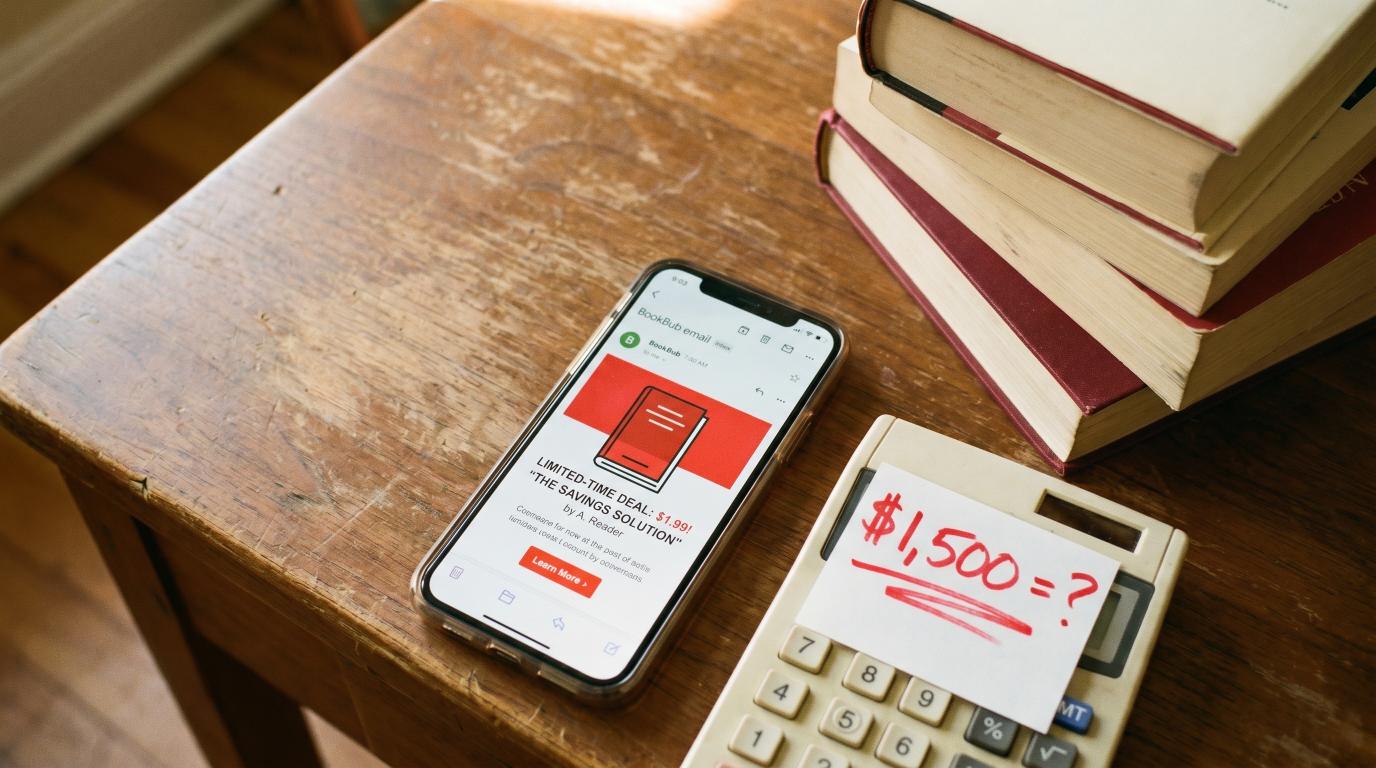

Amazon's algorithm makes one thing brutally clear: books with under 10 reviews don't get surfaced. The recommendation engine, the also-bought carousels, the category bestseller lists — all of it punishes books in single-digit-review territory. Authors who break through to 50+ reviews see their organic discovery multiply 5–10x almost overnight.
Getting those first reviews is the hardest milestone in self-publishing. This article is the seven methods that actually work in 2026, ranked from cheapest to most expensive, with the trade-offs honest and the TOS violations flagged.
The Methods (Ranked by ROI)
| # | Method | Cost | Time | Reviews per 100 readers | TOS-safe? |
|---|---|---|---|---|---|
| 1 | ARC reader list (your own) | Free | 4–8 weeks | 30–50 | ✓ |
| 2 | BookFunnel + reader list | $20–$100/mo | 2–4 weeks | 20–35 | ✓ |
| 3 | NetGalley co-op listing | $50–$450 | 4–6 weeks | 25–40 | ✓ |
| 4 | BookSirens | $10/book + tips | 4–8 weeks | 15–25 | ✓ |
| 5 | Booksprout / Hidden Gems | $50–$200 | 4–6 weeks | 20–30 | ✓ |
| 6 | Reciprocal review swaps | Free | 2–4 weeks | 50–100 | ❌ Amazon TOS violation |
| 7 | Real magazine press → reader-driven reviews | $300–$15K | 30–60 days | Indirect, but compounding | ✓ |
The "reviews per 100 readers" column is what most articles get wrong — they tell you "send your book to ARC readers" without saying that only 30–50% of ARC readers actually leave a review. Plan for that conversion rate from day one.
Method 1: Your Own ARC Reader List (Best ROI)

An ARC (Advance Reader Copy) program is the gold-standard approach: 4–8 weeks before launch, you send a free digital copy of your book to a list of readers who've agreed in advance to leave an honest review on launch week. They get the book early; you get the reviews that break the algorithmic ceiling.
How to build your ARC list
If you have an email newsletter (even 50 subscribers): send a request — "Want to read [book name] free, 6 weeks early? Reply REVIEW and I'll send you a copy." Conversion: 30–60% of subscribers will say yes. That's your ARC list.
No email list? You're behind, but you can:
- Post in your existing social channels asking for ARC readers
- Add a "Be My ARC Reader" lead magnet to your author site
- Approach genre-specific Goodreads groups (carefully — most ban promotional posts)
- Trade ARC slots with other indie authors in your genre (NOT reviews — see Method 6 — but you can each agree to read each other's books)
How to manage the list
Don't email people Word docs. Use BookFunnel ($20/mo) or StoryOrigin (free tier) — both let you send DRM-watermarked digital files and track who downloaded.
BookFunnel is the standard. It also handles "reader magnets" (lead-gen for newsletter signups) and integrates with Mailchimp / ConvertKit. If you'll be doing more than one book, set this up early.
What to ask for in the request email
Specific, not generic:
- Send the file via BookFunnel (link expires in 14 days, prevents piracy)
- Ask for a review on Amazon and Goodreads on launch day or within 7 days after
- Provide review-template suggestions (3–5 sentences is plenty; readers freeze when asked for a "real review")
- Say it's okay to be honest — and mean it. A 3-star review from a real reader is better than a 5-star from your sister.
Realistic conversion: 30–50% of ARC readers will leave a review. So aim for an ARC list 2–3x the number of reviews you want by launch week. Want 30 reviews? Send to 75–100 readers.
Method 2: NetGalley
NetGalley is the largest digital ARC marketplace — librarians, booksellers, journalists, professional reviewers, and avid readers browse it for early access copies. For traditional publishers it's standard. For indie authors it's accessible via co-op listings.
How indie authors get on NetGalley
You can't list your book directly — you need a "co-op" service that bundles indie books on a shared shelf:
- Smith Publishing ($450/6 months)
- Booksgosocial (~$200–$300)
- Voracious Readers Only (~$50–$80, but smaller reach)
Your book gets listed in the indie shelf; readers request it; you approve or auto-approve.
What to expect
- Roughly 50–200 download requests per month if your cover and blurb are strong
- Conversion to actual review: 25–40% (NetGalley readers are generally serious about reviewing what they request)
- Reviews appear on Goodreads, NetGalley itself, and often get reposted to Amazon at launch
- Skews to female fiction, romance, mystery, YA — sci-fi and lit-fic see lower request volume
When it's worth it: When you have 60+ days before launch and want a steady drip of reviews going to Goodreads pre-launch (which builds Goodreads social proof before Amazon launch).
Method 3: BookSirens
BookSirens is similar to NetGalley but cheaper and indie-focused. You list your book ($10 listing fee + an optional "tip" of ~$1 per download to incentivize signups). Readers download; reviews flow back over 4–8 weeks.
Expect: 15–25 reviews per 100 downloads. Total cost for ~30 reviews: $50–$200 depending on how aggressively you tip.
Good for fiction in popular genres (romance, mystery, fantasy, women's fiction). Less effective for non-fiction.
Method 4: Booksprout / Hidden Gems / OnlineBookClub
These are paid review-club platforms where reviewers commit to leave a review in exchange for free books. They're TOS-safe because no money changes hands per review (Amazon's TOS prohibits paying for reviews directly, but free books in exchange for honest reviews is fine).
- Booksprout — $99/year unlimited books
- Hidden Gems — $99–$199 per book, vetted ARC readers
- OnlineBookClub — quote-based pricing, more curated
Conversion rates: 20–30% of downloads → reviews. Reviews go to Goodreads and Amazon.
Watch out for: Some platforms are border-line. Anything that guarantees a positive review or charges per review violates Amazon TOS. Stick to platforms that frame it as "free book in exchange for an honest review" — that's the legal language.
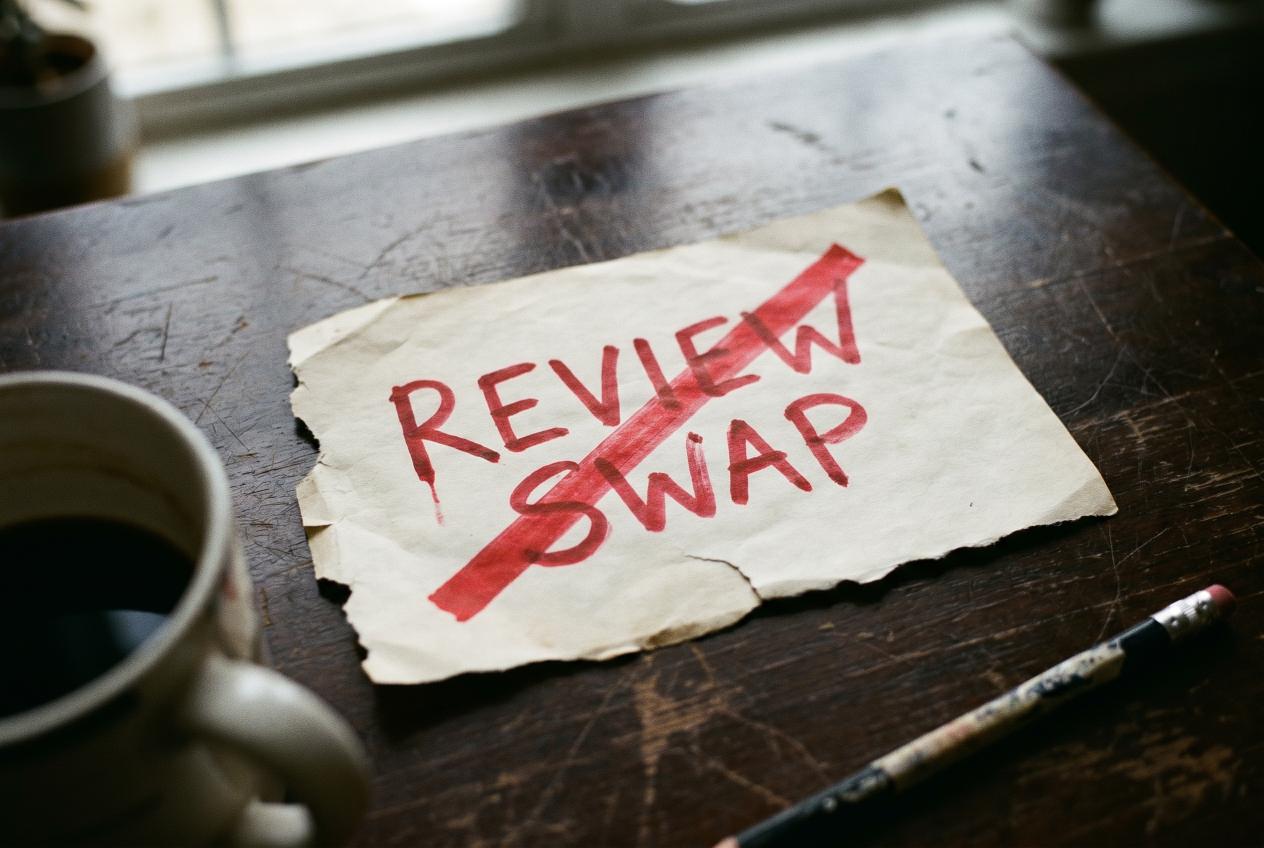
Method 5: Reciprocal Review Swaps (DON'T DO THIS)
You'll see this in indie author Facebook groups: "I'll review your book if you review mine." This is the most efficient way to get reviews.
It's also a direct Amazon TOS violation that gets reviews stripped and accounts banned. Amazon detects review swap patterns through purchase behavior, IP overlap, and reviewer history. Once detected, all involved reviews are removed (sometimes weeks or months later) and accounts can be flagged.
Don't do this. The short-term boost isn't worth the long-term risk.
If you want to support other indie authors, you can read each other's books and review them — but never as a transaction. The moment it's "you review mine, I review yours," you're in violation. Amazon enforces this aggressively in 2026.
Method 6: Goodreads Giveaways
Goodreads Giveaways are the official way to give away free book copies on the platform. Authors pay a fee ($119–$599 depending on tier) to list a giveaway; Goodreads users enter; selected winners receive copies.
Reality check: Goodreads giveaways are terrible for review generation. The conversion rate from "won the giveaway" to "left a review" is around 1–5%. The reason: people enter giveaways for everything they're vaguely interested in; most never read what they win.
When it's worth it: Brand awareness and "Want to Read" shelf adds — not reviews. If you can afford it for the awareness lift, fine. For reviews specifically, ARC programs are 5–10x more efficient.
Method 7: Real Magazine Press → Reader-Driven Reviews
This is the method most "how to get reviews" articles miss entirely.
When your book gets featured in a real magazine — miamiherald.com, miamiherald.com, miamiherald.com — readers click through, buy the book, and a meaningful percentage write reviews because they discovered the book somewhere editorially trustworthy. They feel different about reviewing than they do about a Facebook ad-driven purchase.
The numbers compound:
- A single editorial feature drives 200–2,000 readers to your Amazon page (depending on outlet and article placement)
- Conversion to purchase: 1–3%
- Of buyers, ~5–10% leave a review (vs ~1% for ad-driven traffic)
- Net: 2–6 reviews per editorial feature on the slow burn, plus the article URL keeps driving small amounts of traffic for years
Stack this with VUGA's 10 + Miami Herald package (3 magazine features + 10 network placements) and you can expect 6–18 organic reviews from press alone over 60 days — on top of your ARC list.
The press route is also the only review method that works post-launch. ARCs work pre-launch. NetGalley, BookSirens, etc. work best around launch. After 6 months, those programs lose effectiveness because the algorithmic boost window has closed. Press features keep working.
The Stack That Actually Gets You to 50+ Reviews
If you're starting from zero, the order is:
- 8 weeks before launch: Set up BookFunnel ($20/mo). Build an ARC list of 75–100 readers from your existing channels.
- 6 weeks before: Send ARCs via BookFunnel. Schedule reminder emails 7 and 14 days after.
- 4 weeks before: Open NetGalley co-op listing OR BookSirens listing. Both work; NetGalley reaches a different audience (more reviewers, fewer casual readers).
- Launch week: Email ARC list reminding them to post review on launch day or within 7 days.
- Post-launch: Run a real press placement — even the $300 network article — to drive a steady flow of reader-driven reviews and traffic. Stack a larger package (10 Network Articles $3,000 or 10 + Miami Herald $7,500) when budget allows.
This stack gets most indie books from 0 to 30+ reviews by 60 days post-launch. Books that follow it consistently outperform books that rely on a single method.
What NOT to Do
- Don't pay for reviews directly (Amazon TOS violation, account ban risk)
- Don't review-swap with other authors (same reason)
- Don't ask family members to review — Amazon detects this and removes the reviews (linked to your account via address, payment method, or device)
- Don't use Fiverr "review" gigs — most are obvious bot reviews that get nuked, sometimes taking your real reviews with them
- Don't wait for organic reviews to appear — they won't, at the velocity you need
The Bottom Line
Getting reviews is the hardest milestone in self-publishing because it requires systematic effort weeks before you'd think to start. Authors who launch and then think about reviews are already too late.
ARC programs + BookFunnel are the foundation. NetGalley or BookSirens add scale. Real press features add compounding long-term review flow. Don't violate TOS, don't pay for fake reviews, and don't expect organic reviews to materialize without a system.
If you've launched and your reviews are stuck under 10, the press route is the most effective post-launch fix. Browse VUGA author packages — Network Article $300, 10 Network Articles $3,000, 10 + Miami Herald $7,500 — every placement guaranteed.
Sources for this article:
- BookFunnel, Author Documentation
- NetGalley, "How NetGalley Works for Publishers"
- BookSirens, "How to Get Book Reviews"
- Reedsy, "How to Get Reviews on Amazon"
- Kindlepreneur, "How to Get More Reviews on Amazon"