You've seen BookBub mentioned in every "indie author marketing" article. You've heard the success stories: "I made $15,000 in three days from a single BookBub Featured Deal." You've also heard the rejections: "I've applied 12 times in two years; never been accepted."
Both are true. BookBub Featured Deals are the most lucrative single-promotion tool in indie publishing — and the hardest to actually get into. This article is the honest math on whether it's worth pursuing, when to apply, what genre and price economics work, and what to do when BookBub rejects you.
What a Featured Deal Actually Is
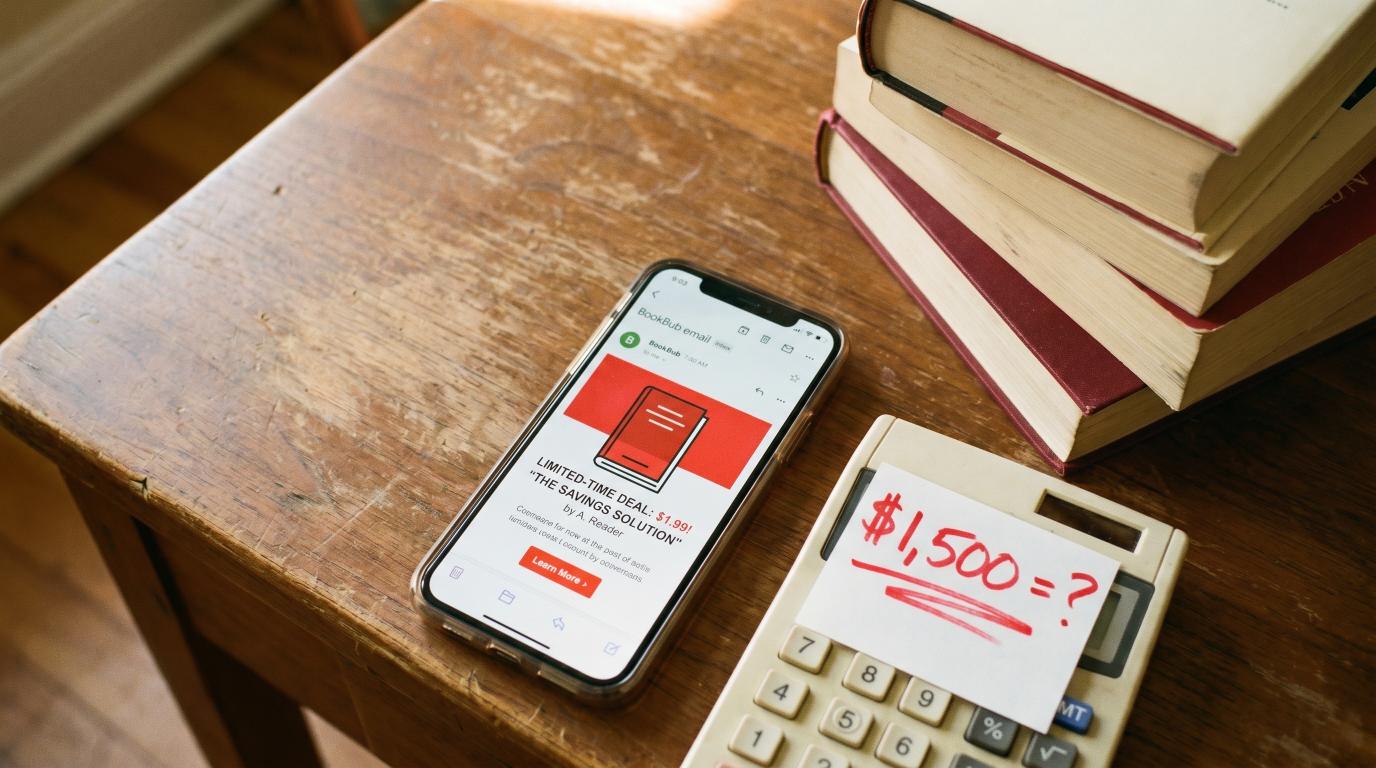
BookBub is an email newsletter (and app) with 24+ million subscribers who receive curated, deeply-discounted ebook recommendations daily. A "Featured Deal" is a paid placement in one of those daily emails, segmented by genre.
When BookBub features your discounted book:
- It goes to 100,000–800,000 genre-targeted readers (depending on category and pricing tier)
- Recipients are pre-qualified deal-buyers (they signed up specifically to get cheap books)
- The promo runs for 24 hours
- Spike duration: 2–5 days of elevated sales, 1–3 weeks of residual visibility
This is dramatically different from regular ads. You're not buying a click — you're buying an editorial recommendation in a curated email read by people who specifically want to discover new books at discount prices.
Pricing — What It Actually Costs
BookBub Featured Deal pricing varies by genre, country, and discount level. Realistic 2026 ranges:
| Genre | $0.99 deal | Free deal |
|---|---|---|
| Romance | $400–$2,200 | $200–$1,000 |
| Mystery / Thriller | $300–$1,800 | $150–$800 |
| Non-fiction (popular) | $250–$1,400 | $130–$650 |
| Sci-Fi / Fantasy | $250–$1,200 | $125–$600 |
| Historical Fiction | $200–$900 | $100–$450 |
| Christian Fiction | $150–$700 | $80–$350 |
| Literary Fiction | $200–$700 | $100–$350 |
The pricing reflects audience size — BookBub's romance subscriber list is much larger than literary fiction, so the placement costs more.
International pricing: US-only deals are cheapest. Adding US + UK + Canada + Australia (the "International" tier) typically multiplies cost 2–3x but with proportional reach.
Realistic Outcomes by Genre
Here's where most authors get burned: Featured Deal ROI varies wildly by genre. The same $1,000 placement that makes a romance author $4,000 might net a literary fiction author $300 — and there's no way to know which side of that you're on without trying.
Romance ($0.99 deal, $1,500 placement)
- 800–2,500 sales of the discounted book during the 24-hour window
- $0.50–$1.00 net per sale (after Amazon's 70% royalty on $0.99 books minus $0.30 processing)
- Direct revenue: $400–$2,500
- Backlist sell-through (if you have 3+ books in a series): $1,000–$5,000 over 30 days as readers buy book 2, 3, etc. at full price
- Net ROI: typically 1.5x–3x for series authors, breakeven for standalones
Mystery / Thriller (similar)
- Similar dynamics to Romance
- Standalone thrillers struggle to recoup
- Series with 4+ books in the line do well
Non-fiction
- 200–700 sales during window
- Backlist effect minimal (no series multiplier)
- Heavy reliance on impulse purchases at $0.99 discount
- Net ROI: typically 0.5x–1.5x — often loses money
Literary Fiction / Memoir
- 100–400 sales
- Almost no backlist effect
- Net ROI: typically negative for the placement alone
The honest pattern: BookBub Featured Deals work mainly for series authors in commercial-fiction genres. Standalone authors and literary authors usually lose money on the placement itself but gain awareness, reviews, and email subscribers if they have an opt-in funnel set up.
How Hard It Is to Get Accepted
This is the part nobody likes:
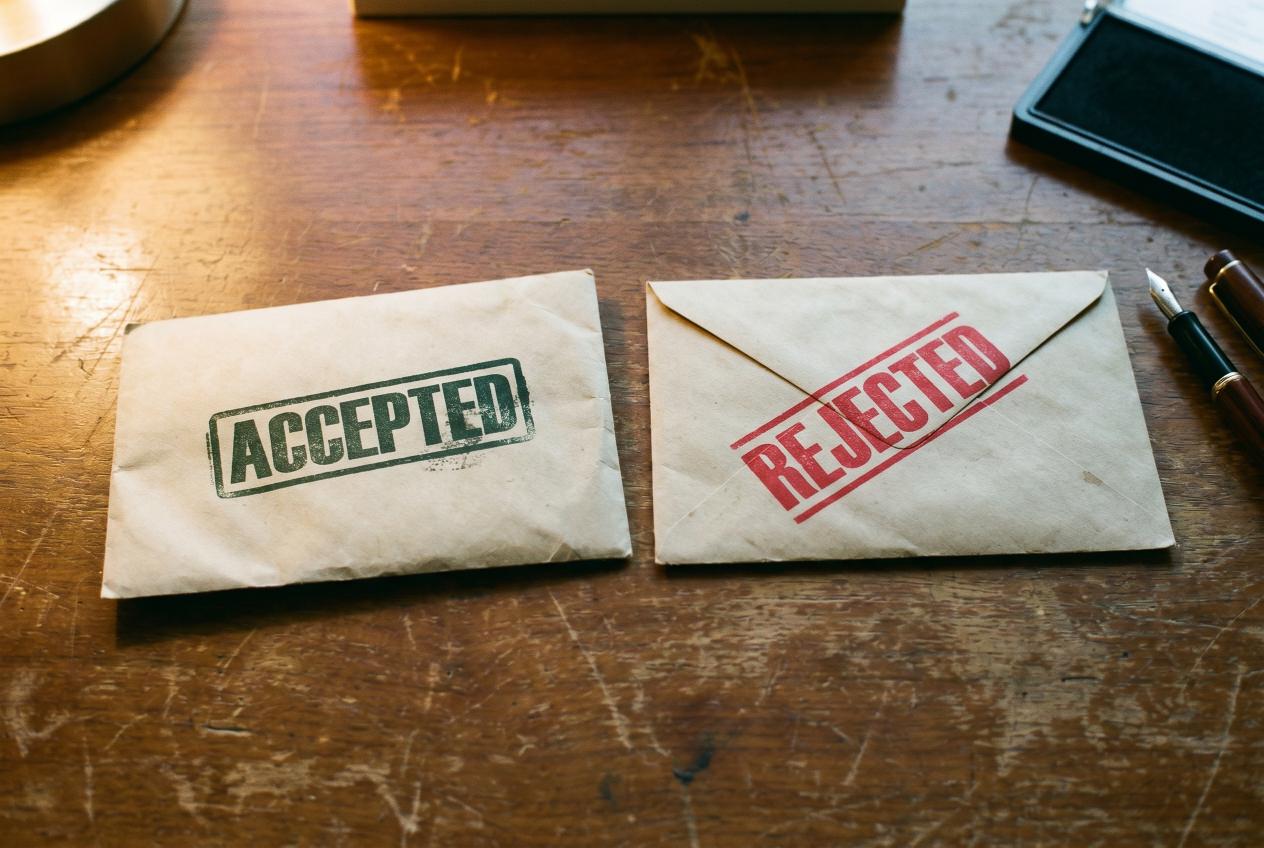
- BookBub accepts roughly 10–20% of submissions
- They reject the same book multiple times (most authors apply 5–15 times before getting accepted)
- They favor: traditionally-published books, established indie authors with proven sales, books with 50+ reviews and 4.0+ rating, books in popular sub-genres
- They reject: books with under 25 reviews, books that haven't built any momentum elsewhere, books with weak covers, books in oversaturated sub-genres
You will likely be rejected your first 3–5 submissions. Don't take it personally. Submit again every 30 days with updated stats (more reviews, recent press, fresh momentum signals).
What improves your acceptance odds
- Real magazine press — having "as featured in Miami Herald" in your media kit signals legitimacy to BookBub editors
- 50+ reviews with 4.0+ rating on Amazon
- Bestseller badges in niche categories
- Cover redesign if your current cover doesn't pass the thumbnail test
- Genre alignment — if you're in a saturated sub-genre, try positioning as a deeper niche
- Bonus discount — "permafree book 1" offers convert better than $0.99 standalone offers
How to Apply
BookBub Partners is the application portal. Free to apply. You submit:
- Book details (cover, blurb, genre, price during the deal)
- Sample chapter
- Proposed promo dates
- Discount level ($0.99 or free)
- Geographic targeting (US, US+international tiers)
BookBub evaluates over 1–2 weeks and either offers you specific dates with pricing or rejects with a polite no.
When BookBub Featured Deal Makes Financial Sense
The math works when:
- You have a series of 3+ books in the same line, all at full price ($2.99–$5.99). The featured book is the loss-leader; backlist sales are the profit. This is the structural ROI of BookBub for indie authors — 70%+ of profit is backlist sell-through, not the discounted book itself.
- You're in a commercial-fiction genre (Romance, Mystery, Thriller, popular Non-fiction) where the audience is large enough to drive 1,000+ sales in 24 hours
- You can absorb a partial loss if it doesn't hit — you're treating it as marketing investment, not pure ROI
- You have an email funnel (lead magnet → newsletter → upsell) so you convert the free-book readers into long-term fans
If you have one standalone literary novel with 8 reviews and no series, BookBub is not your channel. The math doesn't work for that profile.
BookBub Featured Deal Alternatives
If BookBub rejects you (likely for the first several attempts) or doesn't fit your economics, alternatives exist:
Other newsletter promo sites (cheaper, smaller reach)
- Bargain Booksy — $30–$95 per promo, similar format
- BookGorilla — $50–$150 per promo
- Robin Reads — $25–$85 per promo
- The Fussy Librarian — $15–$30 per promo
These are 5–20% the reach of BookBub but 1–10% the cost. Many indie authors run "stacked promos" — multiple newsletter sites on the same week to amplify a single discount push.
Real magazine press (different audience, longer tail)
A BookBub Featured Deal lasts 24 hours plus 2–3 weeks of residual visibility. A real magazine feature lasts forever — the article URL stays live, indexed by Google, and surfaces in author-name searches indefinitely.
The audiences are different too. BookBub readers are deal hunters — they buy at $0.99 and may never read at full price. Magazine readers are discovery-stage readers who came to the magazine for editorial content. They're more likely to pay full price and become long-term fans.
VUGA's editorial placement packages (10 Network Articles $3,000, 10 + Miami Herald $7,500, 10 + Celebrity Bundle $14,997) are structurally different products from BookBub. They drive readers at full price (no discount required), they last for years, and they generate trust signals (magazine logos for your "as featured in" strip) that BookBub doesn't provide.
The smartest indie authors use both: a BookBub Featured Deal to drive a short surge of cheap downloads (and backlist sell-through), magazine press for long-term discovery and trust. Different jobs. Both can pay back if you're in the right genre.
What to Do This Week
If you're considering BookBub:
- Check if your book qualifies — minimum 25 reviews with 4.0+ average; cover passes thumbnail test; genre on BookBub's accepted list
- Submit to BookBub at BookBub Partners
- Apply to alternatives while waiting for BookBub decision (Bargain Booksy, BookGorilla, etc.) — these are easier to get accepted and form a useful "stacked promo" calendar
- Don't rely on a Featured Deal as your only press strategy — pair with real editorial coverage for compounding visibility
If you've already been rejected by BookBub:
- Build to 50+ reviews before re-applying (highest-impact factor)
- Get real magazine press to add credibility signals to your application — even one editorial feature changes how BookBub editors read your submission
- Re-apply every 30 days with updated stats; persistence pays off
Bottom Line
BookBub Featured Deals are real and lucrative for the right author profile: series authors in commercial fiction with 50+ reviews, a strong cover, and an email funnel. The same placement loses money for standalone literary authors with under 25 reviews.
The acceptance rate is brutal. Plan to be rejected 3–10 times before acceptance. Use the rejection time to build credibility — reviews, real press features, niche category bestsellers — that BookBub editors weight heavily.
For the long-term tail effect that BookBub doesn't deliver — permanent discovery, magazine logos for the "as featured in" strip, full-price reader conversion — pair editorial press with promotional pricing pushes. VUGA author packages handle the editorial side; BookBub handles the discount-pricing side.
Sources for this article:
- BookBub Partners, "Featured Deals Pricing"
- Reedsy, "BookBub Featured Deal: Is It Worth It?"
- Kindlepreneur, "BookBub Featured Deal Strategy"
- Joanna Penn, "Book Promotion Sites Like BookBub"
- David Gaughran, "BookBub Featured Deal Honest Review"