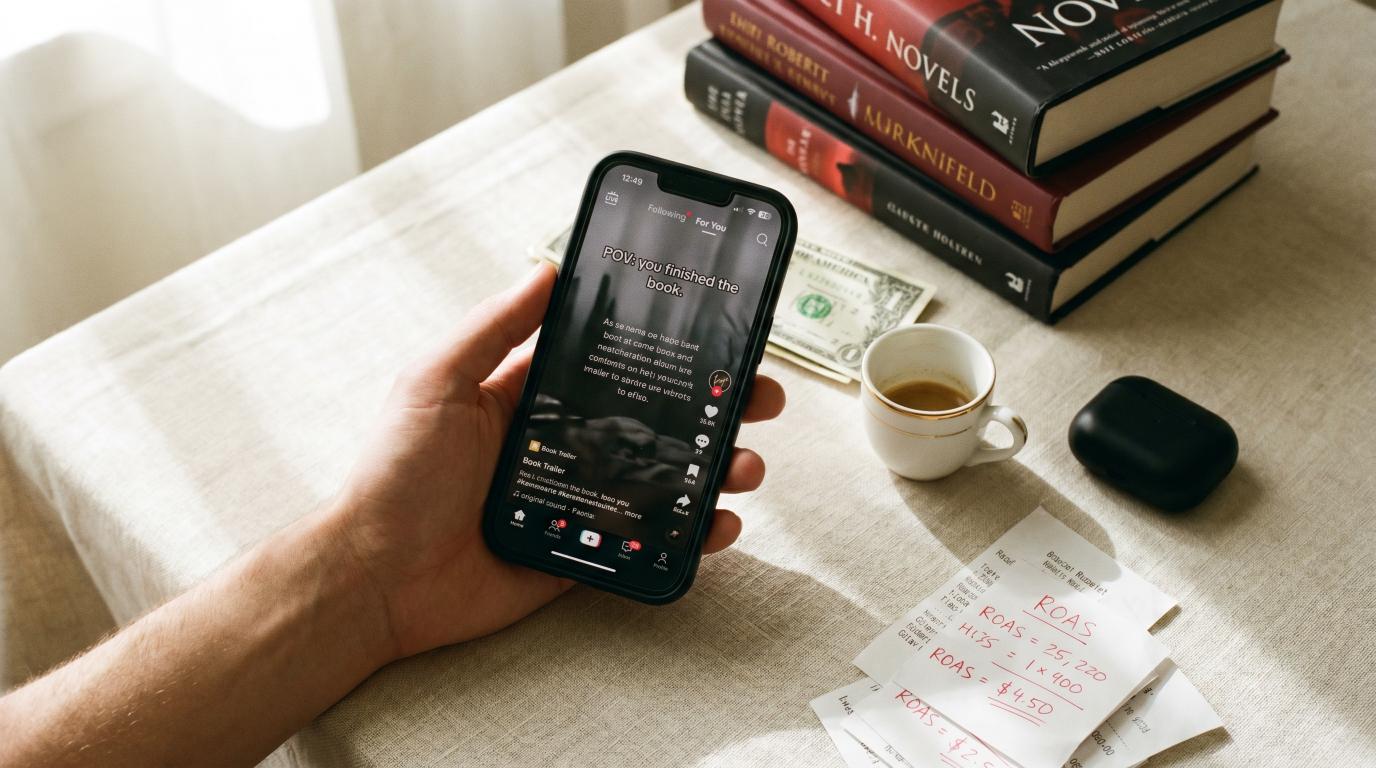
The BookTok organic growth window has tightened. The viral overnight that made authors millionaires in 2021–2023 still happens, but it's rare, unpredictable, and usually requires creator features the average indie can't engineer. What's quietly replaced it is paid TikTok — Spark Ads, in-feed video ads, and creator-licensed UGC running at scale.
The good news for authors in 2026: TikTok ads for books, when set up correctly, deliver measurable cost-per-sale numbers competitive with Amazon Ads and Facebook Ads, with the added benefit of building real video assets and a real audience. The bad news: most indie authors waste their first $500 because they boost an organic post instead of running a proper campaign.
This is the working version of paid TikTok for books — what budgets to test, how to structure your first campaign, the hook formulas that convert, and the realistic ROI to expect.
Why TikTok Ads Beat Boosts
The first rule: do not press "Boost" on an organic post. The boost button uses a stripped-down version of the ad system, has worse targeting, no proper conversion tracking, and burns cash with no learning. Every dollar should go through TikTok Ads Manager (ads.tiktok.com).
What proper ads unlock:
- Conversion-objective campaigns that optimize for clicks-to-Amazon, not views
- Pixel-based audiences (retarget anyone who watched 50% of your video)
- Lookalike audiences off your existing customer email list
- Creative testing across multiple hooks at once
- Real cost-per-click and cost-per-conversion numbers
Authors who only ever boost see $0.30 cost-per-view and 0.1% click-through, which feels okay until you do the math: a $300 boost generates 1,000 clicks at $0.30 each, of which maybe 10 turn into Amazon visits, of which maybe 1 buys. $300 for one sale is not a campaign — it's a tax.
The Three Ad Formats Authors Should Know
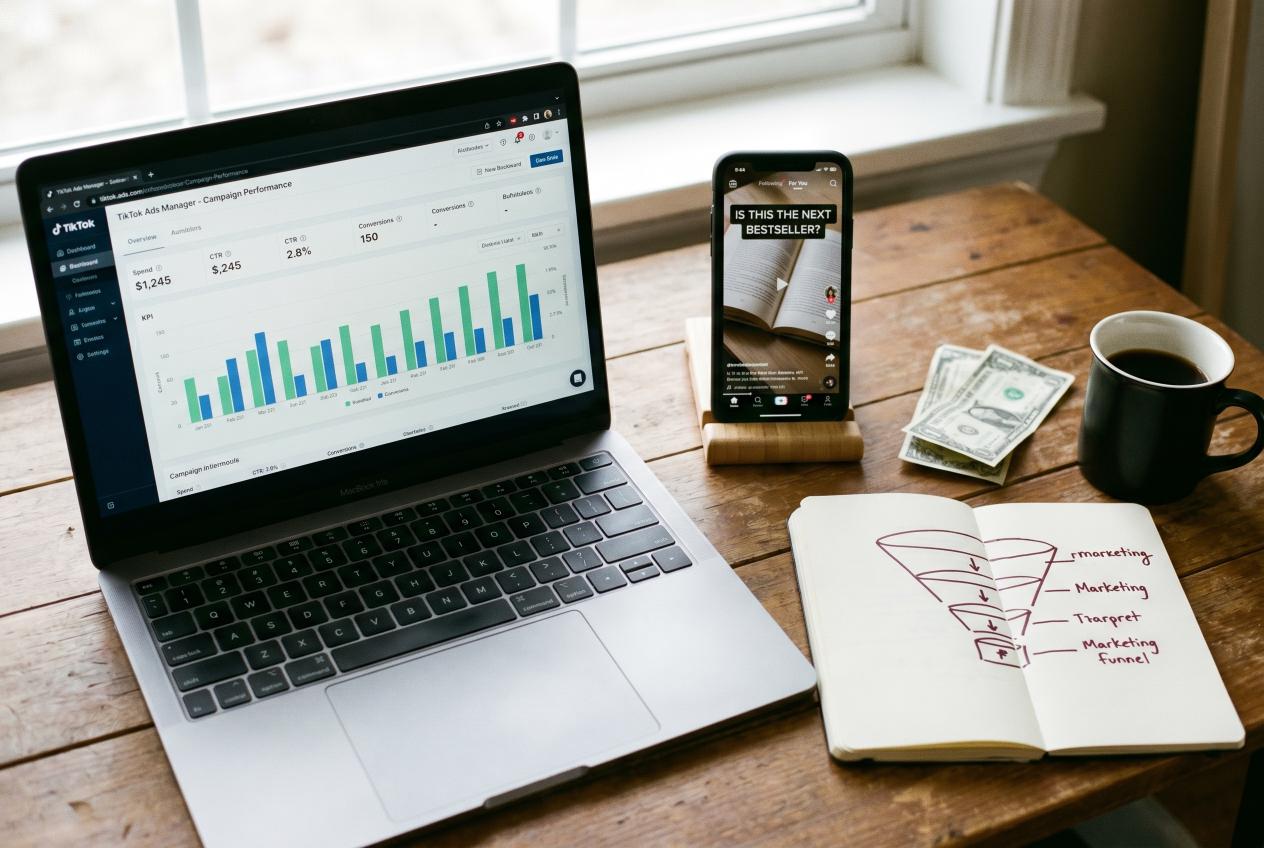
1. In-feed video ads
Standard TikTok ad format. You upload a 15–30 second vertical video, target an audience, and pay per view or per click. These run alongside organic content with a "Sponsored" label.
Best for: testing book trailers, UGC-style author videos, scene-driven hook reels.
Realistic costs in 2026:
- CPM: $6–$14 in the US books vertical
- CPC: $0.40–$1.20 (well-optimized) or $2–$6 (poorly optimized)
- Cost per Amazon click-through: $0.80–$3 (well-optimized)
2. Spark Ads (the indie author favorite)
Spark Ads let you turn an organic TikTok post — yours or another creator's, with permission — into a paid ad. The ad keeps all the original likes, comments, and shares, which makes it look native and dramatically increases trust.
Why this matters for books: a Spark Ad of a BookTok creator's organic review of your book, boosted to a targeted audience, converts at 2–4x the rate of a generic in-feed ad. The social proof is built in.
How to run it:
- Find a BookTok creator whose audience matches your genre — 5,000–80,000 followers is the sweet spot.
- Pay them a flat licensing fee ($150–$600) plus optionally a free copy and a small affiliate cut.
- They post their review organically; you boost it through the Spark Ad system using their authorization code.
- You target the audience: women 25–45, US, interested in fiction / fantasy / romance / your specific comp authors.
This is the single most ROI-positive paid TikTok setup for indie authors in 2026.
3. Creator-licensed UGC
You hire a UGC creator (not necessarily a BookTok influencer — sometimes a generic UGC creator) to film a 15–25 second video reading or reacting to your book. You then run that video as an in-feed ad without ever posting it organically.
Cost: $80–$300 per UGC video on platforms like Billo or direct on Backstage. Aim for three videos per campaign so you can test which hook wins.
This format is what scales — once you find the winning hook, you can spend $5,000+/month on it without burning out a single creator.
Realistic Test Budgets
Forget gurus telling you to start at $50/day. The real testing structure for an indie author in 2026:
Phase 1 — Validation ($500–$1,000 over 14 days)
- 3 ad creatives, 1 audience, $30–$50/day
- Goal: find which creative gets cost-per-click under $1
- If none do, kill the campaign — your creative is the problem, not the platform
Phase 2 — Optimization ($1,000–$2,000 over 21 days)
- Take winning creative, test 3 audiences, $50–$100/day
- Goal: find which audience converts to Amazon click-through under $3
- Add retargeting layer for video viewers at 50%+
Phase 3 — Scaling ($2,000–$5,000+/month)
- Winning creative + winning audience, scale daily budget by 20% per week
- Refresh creative every 2–3 weeks (TikTok creative fatigue is fast)
- Add 1–2 new creators to the rotation each month
Authors who try to skip Phase 1 and go straight to scaling lose the most money. The discipline of testing 3 creatives at $30/day each for 14 days catches creative failures cheaply — you'd rather kill a $500 test than scale a bad ad to $5,000.
The Hook Formula That Stops the Scroll
The first 1.5 seconds of a TikTok ad determine 80% of its performance. The hooks that work in the books vertical follow a tight formula:
Pattern interrupt + emotional stakes + specificity
Examples that convert in 2026:
- "I read 47 fantasy books this year and only one made me cry on a Tuesday at 2 a.m." (specific number + emotional + curiosity)
- "Stop scrolling — if you loved [comp title] you need to know about this book" (direct command + comp title trigger)
- "Why is everyone lying about how good this romance is" (controversial framing + pulls click for resolution)
- "This author has a clause in their contract that the ending can never be changed — and once you read it you'll know why" (mystery + stakes)
- POV hooks: "POV: you finished the last page and immediately bought a used copy to annotate" (specific reader behavior)
Avoid:
- "My new book is out!" — author-centered, no stakes for the viewer
- Generic "if you love romance you'll love this" — no specificity
- Long preamble before showing the book — the first second must show the book
The book itself should appear on screen by second 3, not second 12.
Attribution: How to Actually Track ROI
Attribution is where most authors get burned. TikTok will report ad-platform conversions, but if you're driving to Amazon, TikTok's pixel can't see the purchase. You're flying partially blind.
The working attribution stack:
- Amazon Attribution — free for KDP authors. Generates a tracking link for each ad campaign that reports Amazon clicks, detail page views, and sales attributable to that source. Mandatory.
- TikTok Pixel + landing page — instead of sending traffic straight to Amazon, send to a simple landing page on your author website with the cover, blurb, and Amazon button. The pixel fires on landing-page click; you measure cost per click-through to Amazon.
- Pre-order or KDP rank tracking — for launch campaigns, watch your KDP daily rank in your sub-category. A campaign that pushes you from rank 8,000 to rank 800 in a sub-category is converting, even if attribution is murky.
- Email opt-in offer — bake an email lead magnet into the landing page. Even if the reader doesn't buy on click, you've captured them for email funnel follow-up.
Realistic numbers for a well-run TikTok campaign in books:
- $1.20–$3 cost per Amazon click-through (via Amazon Attribution)
- 3–8% Amazon conversion rate from those clicks
- Effective cost per book sale: $15–$60 on a $4.99 ebook (so unprofitable on the ebook alone)
- Effective cost per Kindle Unlimited page-read revenue + ebook: $8–$30 — closer to break-even
- Profit comes from series read-through, paperback sales, and email list value
Single-book authors should expect TikTok ads to roughly break even on direct sales. Series authors with 3+ books often see 1.5–2.5x ROAS once read-through kicks in.
When TikTok Ads Beat Amazon Ads
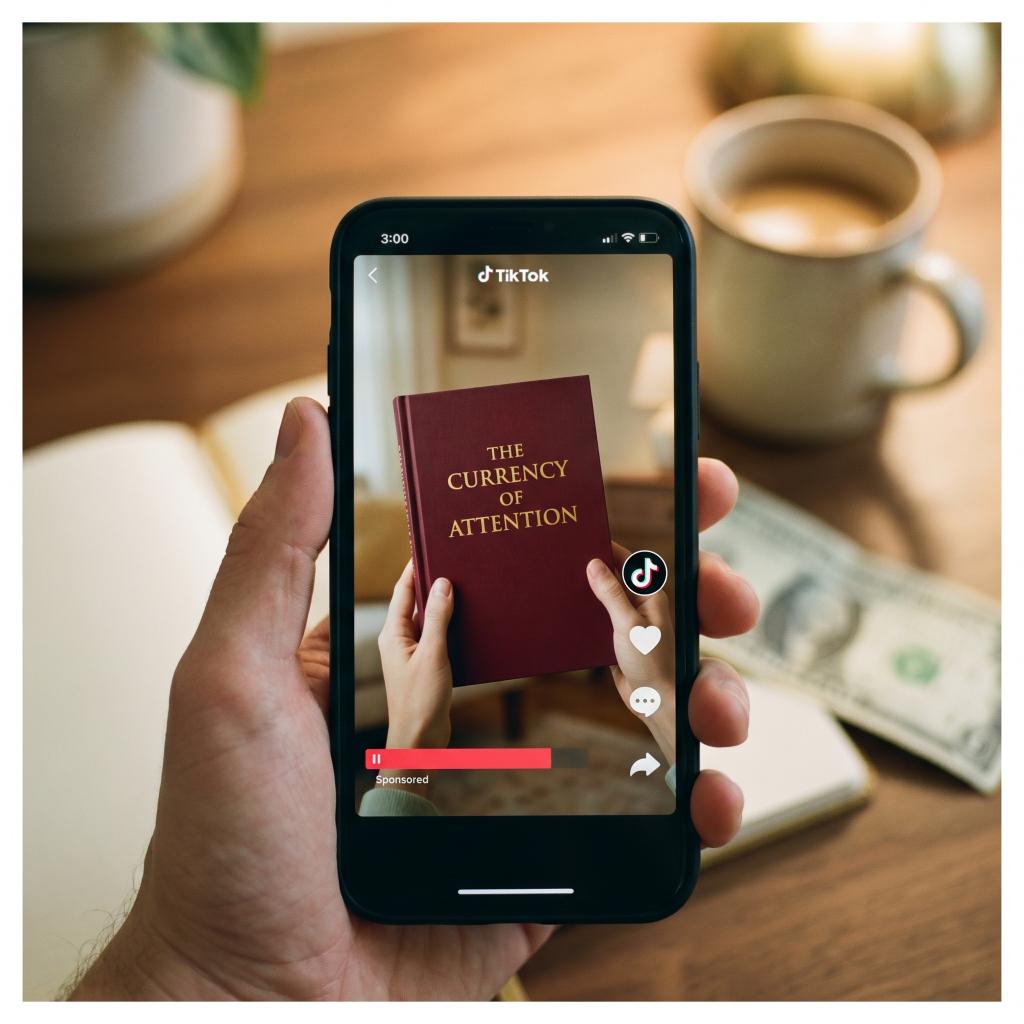
Amazon Ads vs Facebook Ads covers the broader paid landscape. TikTok ads earn their spot when:
- Your book is fiction in a visual genre (romance, fantasy, thriller, YA)
- You have a series with strong read-through (book 1 funnels into KU)
- You can produce or license 5+ video creatives a month
- Your goal is audience building plus sales, not just sales
TikTok loses to Amazon Ads when:
- Your book is non-fiction with a niche professional audience
- You only have one book and weak read-through
- You can't or won't produce video creative
What VUGA Does for TikTok Ad Authors
A TikTok ad converts at a meaningfully higher rate when the bio of the linked landing page says "as featured in TIME and Rolling Stone." The press feature is the trust signal that lets a $1.50 click turn into a sale instead of a bounce.
VUGA's role for paid-TikTok authors is the credibility that lifts ad ROAS — full editorial features (not press releases) in TIME, Rolling Stone UK, Miami Herald, and the 140-outlet owned network. Authors typically place the outlet logos directly on the landing page above the fold, which often pulls a 20–40% conversion lift on the same TikTok ad spend.
The 10 + Celebrity Bundle package is the most common fit for authors running paid TikTok at scale — TIME and Rolling Stone logos as "as seen in" trust signals make the ad math work on a single book. See for-authors for current packages or contact us to map a paid-social-plus-press launch.
The 30-Day TikTok Ads Plan
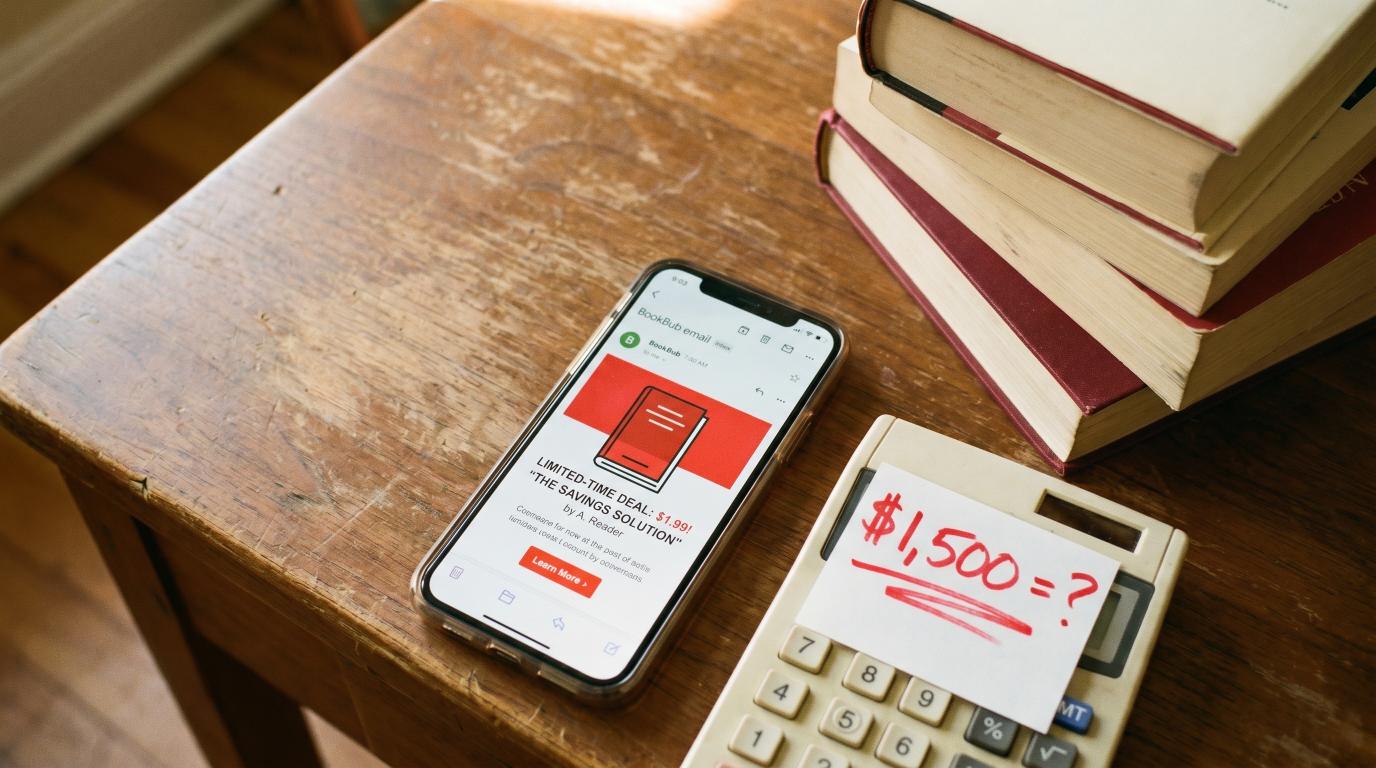
If you've never run TikTok ads and want to test cleanly with a $1,500 budget:
Days 1–7: Setup
- Create TikTok Ads Manager account, install pixel on landing page
- Set up Amazon Attribution links
- Hire one UGC creator for 3 videos ($300 total)
- Identify 1 BookTok creator for a Spark Ad ($300 license)
Days 8–21: Phase 1 testing
- Launch 3 in-feed ads + 1 Spark Ad
- $40/day total budget across creatives
- Daily check at 9 a.m.: kill any creative with CPC over $2 after $80 spent
- Day 14 review: which creative is the winner?
Days 22–30: Phase 2 optimization
- Winning creative only, scaled to $80/day
- Add retargeting audience for video viewers at 50%+
- Monitor Amazon Attribution daily for sales lift
By day 30 you should have: a real CPC number for your book, a confirmed working creative, an audience seed for scaling, and 30–120 attributable Amazon sales. That's the baseline you build a 90-day scaling plan on top of.
Final Reality Check
TikTok ads for books are not a get-rich-quick lever. They're a methodical paid-acquisition channel that, run properly, delivers cost-per-sale numbers competitive with Amazon Ads and Facebook Ads — with the added benefit of compounding video assets you can reuse for years.
The authors who win at paid TikTok in 2026 follow the same discipline as paid-acquisition marketers in any other vertical: test small, kill bad creative fast, scale only what works, layer credibility signals on the landing page, and read the data weekly. The authors who lose treat it as a magic button.
If you want help layering credibility on top of your TikTok ad funnel, VUGA's $300 trial is the fastest way to add a tier-one outlet logo to your landing page in under 30 days. Or contact us to scope a paid-social-plus-editorial launch around your next book.
Sources for this article:
- TikTok for Business, "TikTok Ads Manager guide"
- TikTok, "Spark Ads documentation"
- BookBub Insights, "Paid social for authors 2026"
- Kindlepreneur, "Amazon Attribution for indie authors"
- Reedsy, "Paid advertising for books"
- Written Word Media, "What works on paid TikTok for books"